
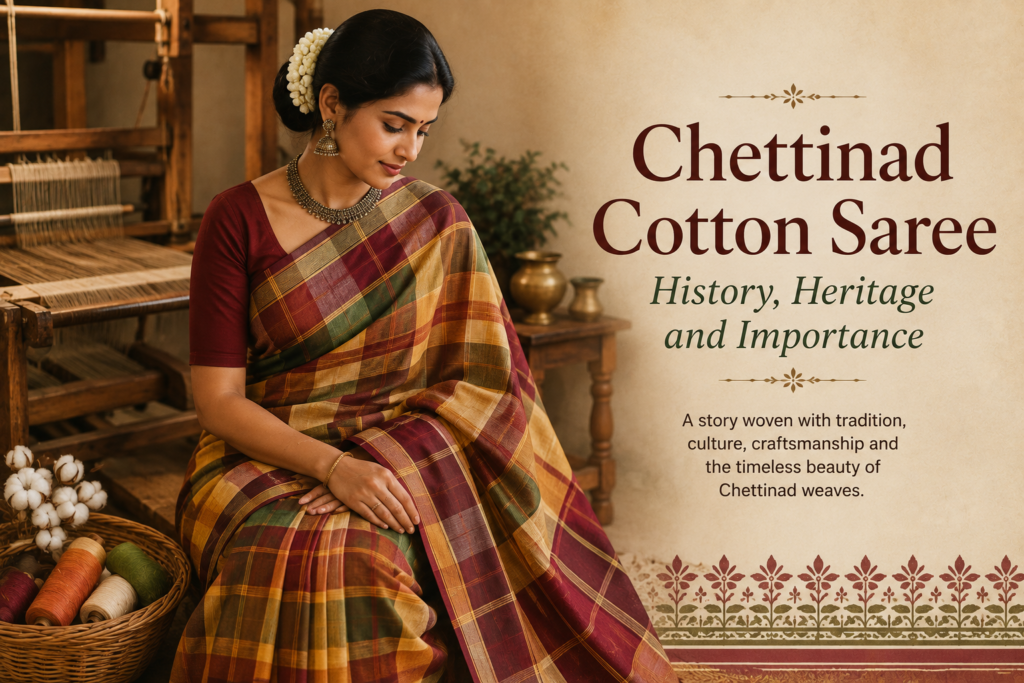
Have you ever worn a cotton saree that feels completely comfortable, yet somehow looks effortlessly elegant? If you love traditional Indian handlooms, there is a good chance the Chettinad cotton saree will catch your attention.
Known for its distinctive checks, stripes, vibrant colours, comfortable cotton fabric, and strong connection to Tamil Nadu’s textile heritage, the Chettinad cotton saree is much more than an everyday garment. It carries the story of a region, its people, its artisans, and a weaving tradition that has continued through generations.
So, where did the Chettinad cotton saree come from? Why is it so special? And why does this traditional saree continue to find a place in modern wardrobes?
Let’s explore its story together.
What Is a Chettinad Cotton Saree?
The Chettinad cotton saree is a traditional cotton handloom associated with the Chettinad region of Tamil Nadu in South India.
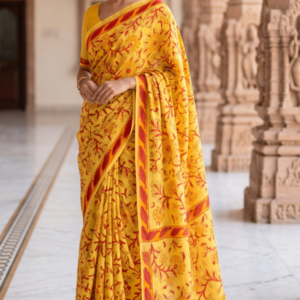
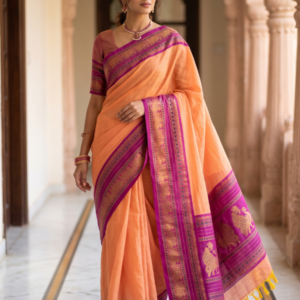
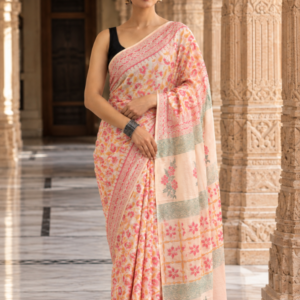
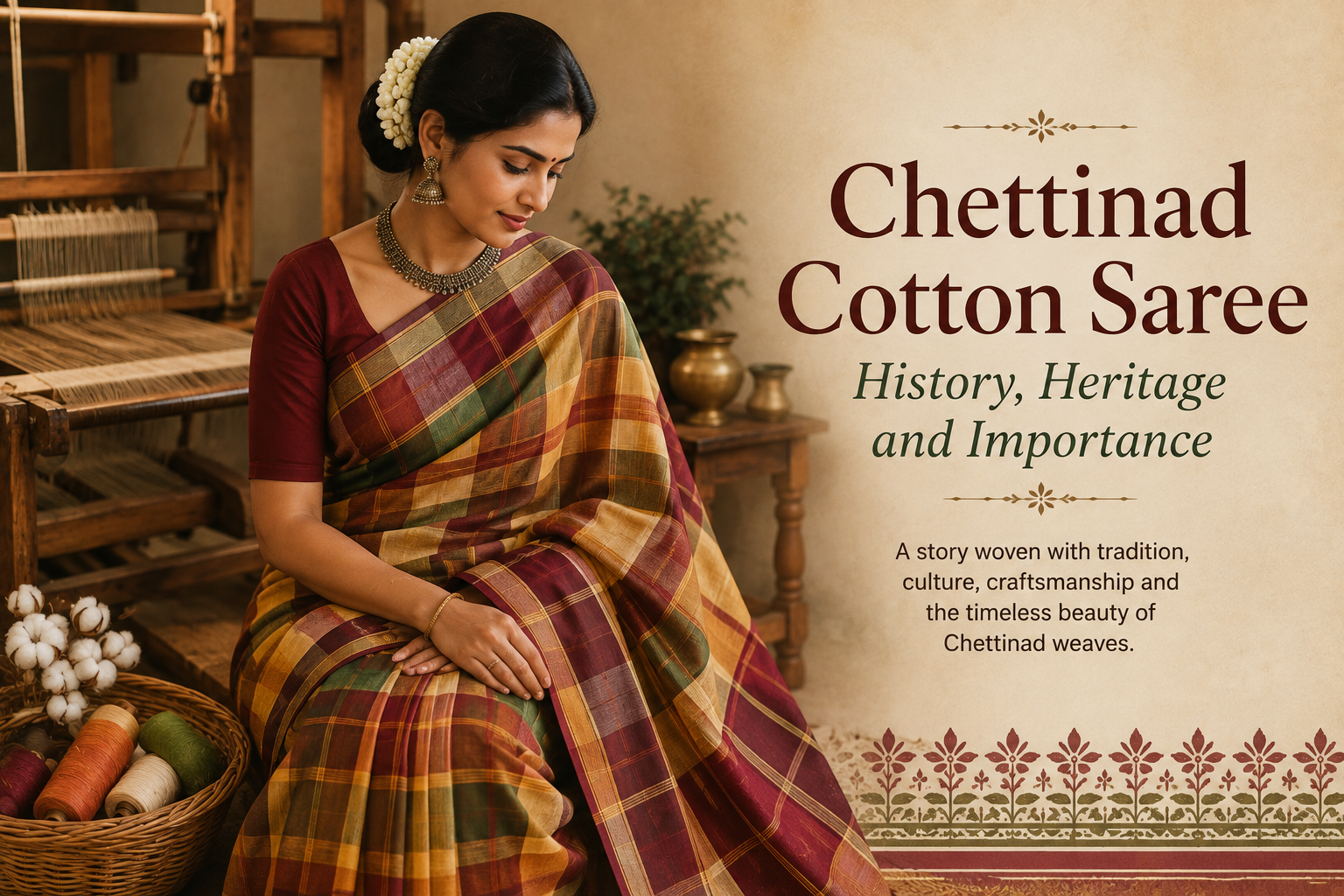
When you first look at one, you may notice its bold checks, stripes, contrasting colours, and distinctive woven patterns. But look a little closer and you will begin to appreciate the craftsmanship behind those simple-looking designs.
Traditionally woven using cotton yarn, Chettinad sarees are valued for their lightweight feel, breathability, durability, and striking visual character.
They were designed for real life.
They were comfortable enough for the warm South Indian climate and practical enough for everyday use, while still carrying the beauty and individuality of traditional Indian textiles.
The History of Chettinad Cotton Sarees
To understand the history of the Chettinad cotton saree, it helps to understand Chettinad itself.
Chettinad is a culturally rich region in Tamil Nadu, historically associated with the Nattukottai Chettiar community. The region became well known for its distinctive architecture, cuisine, trade connections, and cultural traditions.
Textiles were also an important part of this cultural landscape.
Weaving communities developed fabrics that suited the local environment and lifestyle. Cotton was an especially practical choice because of the region’s warm climate.
Over time, weaving techniques and design traditions developed into the distinctive style associated with Chettinad cotton sarees.
The saree became known for its strong geometric patterns, especially checks and stripes, along with vibrant colour combinations and contrasting borders.
What makes the story particularly fascinating is that the saree was never created simply as a fashion statement.
It was created for everyday life.
Why Cotton Was the Perfect Fabric for Chettinad
Imagine living in a warm and humid climate and having to wear heavy fabric every day.
It would hardly be comfortable, would it?
Cotton offered a natural solution.
The breathable nature of cotton made it particularly suitable for South India’s climate. It allowed women to remain comfortable while wearing a traditional saree throughout the day.
This practical quality helped cotton become deeply connected with everyday South Indian clothing.
Chettinad cotton sarees combined this comfort with distinctive designs, giving women a garment that was both functional and beautiful.
And perhaps that is one of the reasons these sarees remain relevant today.
The Distinctive Checks and Stripes
One of the first things you may notice about a Chettinad cotton saree is its pattern.
Checks and stripes are among the most recognizable characteristics associated with Chettinad textiles.
At first glance, these patterns may look simple.
But simplicity can be surprisingly difficult to create.
The colours, lines, proportions, and intersections need to work together beautifully. The weaver has to carefully manage the yarns during the weaving process to create a balanced pattern.
This is where the skill of the artisan becomes visible.
A seemingly simple checked saree may actually represent hours of careful planning and weaving.
The Colourful Personality of Chettinad Sarees
Chettinad cotton sarees are also loved for their colours.
Traditional designs often feature strong colour contrasts that give the saree a lively and unmistakable personality. Depending on the design, you may see combinations of earthy tones, deep reds, mustard, green, blue, black, maroon, and other vibrant shades.
These colours give the saree an energetic quality.
Unlike very delicate fabrics that create a soft and understated appearance, Chettinad cotton can have a wonderfully confident presence.
It is traditional, but it does not feel timid.
The Art of Handloom Weaving
Now comes the part that makes a traditional Chettinad cotton saree truly special: the weaver.
A handloom saree begins long before it reaches a shop or wardrobe.
The yarn has to be prepared and arranged carefully before weaving can begin. On the loom, the artisan works patiently to bring the warp and weft threads together.
Every movement contributes to the final fabric.
The distinctive checks, stripes, borders, and colour combinations are created through this careful process.
Unlike mass-produced fabric, handloom weaving is closely connected to the individual artisan.
The saree carries the imprint of human craftsmanship.
That is why two sarees made within the same traditional style can still feel slightly different from one another.
Why Chettinad Cotton Sarees Are Important to Indian Textile Heritage
India has an extraordinary variety of handloom traditions.
Every region has developed textiles influenced by its climate, culture, local materials, artistic traditions, and communities.
The Chettinad cotton saree is an important part of this larger textile story.
It represents the creativity of Tamil Nadu’s weaving communities and demonstrates how everyday clothing can become a form of cultural expression.
The saree tells us something about the region from which it comes.
Its cotton reflects the climate.
Its patterns reflect local design traditions.
Its colours express visual preferences that have evolved over generations.
And its handloom construction connects it to generations of artisans.
Chettinad Cotton Sarees and Everyday Life
One of the most beautiful aspects of the Chettinad cotton saree is that it was never meant to exist only inside a museum.
It belongs in everyday life.
A woman can wear it while going about her daily routine, visiting family, attending a cultural event, working, travelling, or simply enjoying a comfortable day at home.
Its practicality is part of its charm.
You do not necessarily need heavy jewellery or elaborate styling to make a Chettinad cotton saree look beautiful.
Sometimes, a simple blouse, small earrings, traditional bangles, and neatly tied hair are enough.
The saree does the rest.
Why Chettinad Cotton Sarees Are Still Relevant Today
Fashion changes incredibly quickly.
One season we are talking about minimalism. The next season it may be maximalism. Then traditional silhouettes return with a modern interpretation.
Yet certain garments never really disappear.
Why?
Because they solve a real problem.
Chettinad cotton sarees offer comfort, versatility, and individuality.
They can work for women who love traditional clothing as well as women who prefer contemporary fashion.
Pair one with a classic blouse and you have a timeless South Indian look.
Pair it with a modern structured blouse and contemporary jewellery, and suddenly the same saree feels completely different.
That ability to adapt is what keeps traditional textiles alive.
Chettinad Cotton Sarees in Contemporary Fashion
Today, women are finding new ways to style traditional cotton sarees.
A Chettinad cotton saree can be paired with a sleeveless blouse, a contemporary crop-style blouse, a structured shirt-inspired blouse, or a simple traditional blouse.
Accessories can also change the mood of the outfit.
Temple jewellery can create a more traditional appearance, while delicate earrings and a minimalist handbag can create a modern everyday look.
Even the way the saree is draped can influence its personality.
This flexibility shows us something important.
Tradition does not have to mean being stuck in the past.
A traditional textile can become part of modern fashion without losing its identity.
The Importance of Supporting Handloom Weavers
When you buy a handloom saree, you are buying more than fabric.
You are supporting craftsmanship.
Behind every saree is an artisan who has learned a specialized skill, often through generations of knowledge within a weaving community.
When traditional handloom textiles remain commercially relevant, those skills have a greater chance of continuing into the future.
This is why choosing handloom can be a meaningful fashion decision.
You are not simply choosing something beautiful for yourself.
You are also helping keep a traditional craft visible and valued.
Chettinad Cotton Sarees and Sustainable Fashion
There is another reason these sarees feel particularly relevant today.
We are becoming increasingly conscious of what we buy, how it is made, and how long it can remain part of our wardrobes.
A well-made cotton saree can be worn repeatedly in different ways and across different occasions.
Instead of following a trend that disappears after a few months, you can have a saree that remains useful for years.
This is one of the quiet strengths of traditional Indian textiles.
They were designed around longevity, versatility, and everyday use.
In today’s conversation about conscious fashion, these qualities are becoming increasingly valuable.
How to Style a Chettinad Cotton Saree Today
If you are wondering whether a Chettinad cotton saree would work with your personal style, the answer is probably yes.
For an everyday look, you can keep everything simple with a comfortable blouse, small earrings, a watch, and minimal footwear.
For a traditional occasion, you can bring out the saree’s South Indian character with jasmine flowers, traditional jewellery, bangles, and a classic blouse.
For a more contemporary appearance, try pairing a bold Chettinad check with a clean, modern blouse and minimal accessories.
The beauty is that you get to decide what the saree means to you.
The Emotional Connection of a Traditional Saree
Have you ever opened an old wardrobe and found a saree that immediately reminded you of someone?
Perhaps it belonged to your mother.
Maybe it was worn by your grandmother.
Or perhaps it reminds you of a festival, a wedding, a family gathering, or a special moment from childhood.
This emotional connection is one reason sarees are so much more than clothing.
They become memory keepers.
A Chettinad cotton saree can be part of that story.
It can be worn today, photographed today, loved today, and eventually passed on to someone else.
The fabric becomes a bridge between generations.
The Future of Chettinad Cotton Sarees
The future of the Chettinad cotton saree depends on allowing tradition and modernity to exist together.
Younger generations may choose different colours, different blouse designs, and different ways of draping the saree.
That is perfectly natural.
What matters is that the underlying craft continues.
As long as people value the skill of the weaver and appreciate the beauty of handloom cotton, traditional sarees can continue to evolve.
The goal is not to keep the saree exactly as it was hundreds of years ago.
The goal is to allow its story to continue.
Why a Chettinad Cotton Saree Deserves a Place in Your Wardrobe
If you are looking for a saree that combines comfort, colour, tradition, and character, a Chettinad cotton saree is certainly worth discovering.
It is easy to wear, versatile enough for different occasions, and distinctive enough to make a statement without relying on excessive embellishment.
But perhaps its greatest value is the story it carries.
Every check and stripe connects you to a textile tradition shaped by generations of artisans.
Every fold reminds you that fashion can be practical and beautiful at the same time.
And every time you wear it, you help keep that tradition visible.
Final Thoughts
The history of the Chettinad cotton saree is ultimately a story about people.
It is the story of weaving communities, regional culture, traditional craftsmanship, practical clothing, and generations of women who have made the saree part of everyday life.
What began as a practical cotton garment has become a treasured expression of South Indian textile heritage.
And perhaps that is why the Chettinad cotton saree still feels so relevant.
It does not try too hard to be fashionable.
It simply remains beautiful.
It remains comfortable.
It remains connected to its roots.
And most importantly, it continues to carry a story from one generation to the next.
The next time you drape a Chettinad cotton saree, take a moment to appreciate what you are wearing.
You are not just wearing cotton.
You are wearing craftsmanship, culture, history, and a little piece of Tamil Nadu’s rich textile heritage.

No Comment Found.